How BCG Platinion supports clients with AI in practice
-edited.jpg)

What is your background, and what brought you to BCG Platinion?
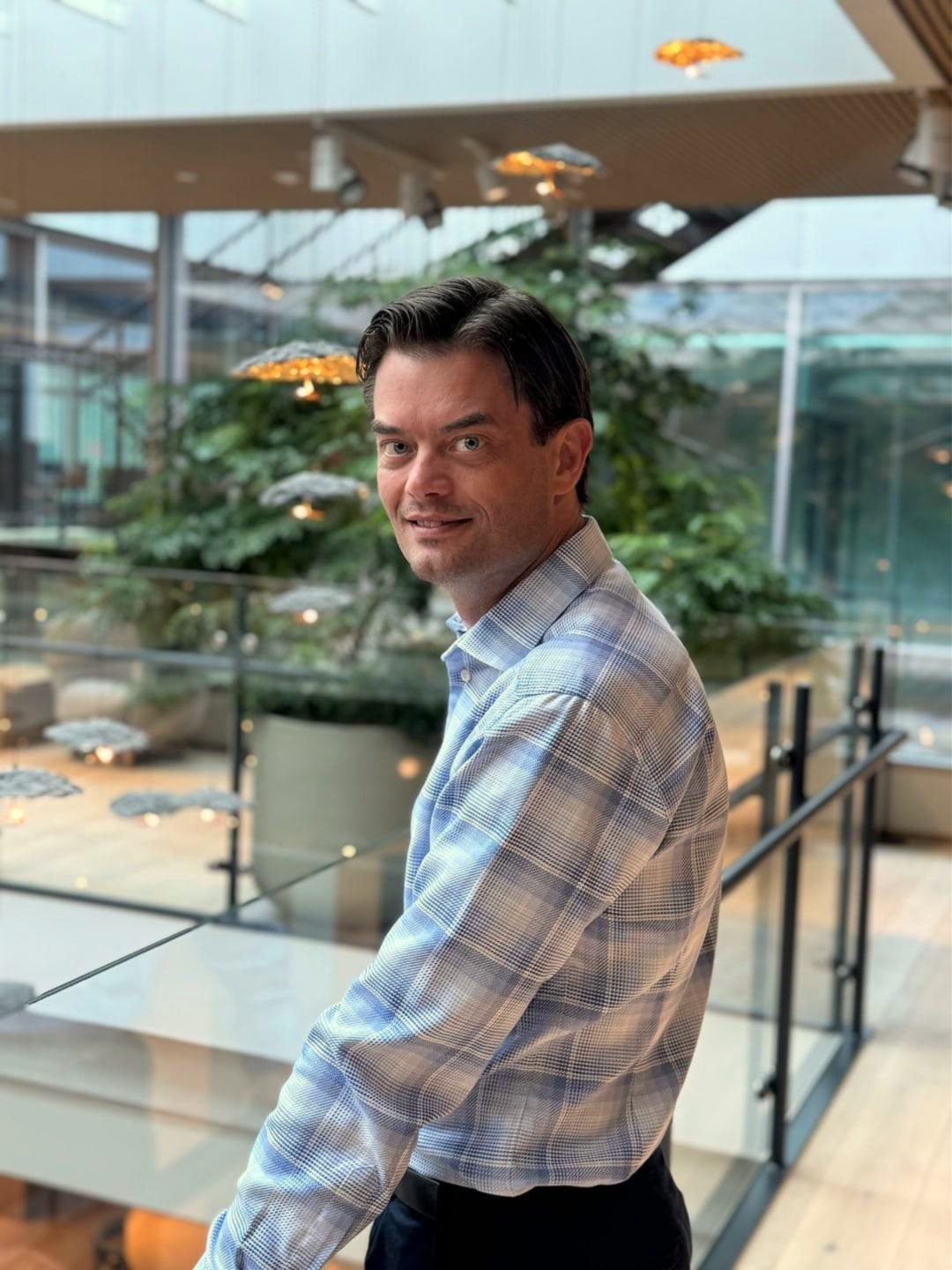
I have a broad and deep background in the SAP ecosystem, with hands-on experience across consulting and corporate roles - as a program manager, solution architect, test manager, data migration manager, and functional finance consultant. After nearly 20 years in consulting, I wanted to apply that experience at a more strategic level. That ambition brought me to BCG Platinion in January 2025.
What challenges do clients typically face when it comes to AI?
Many clients struggle with where and how to start. AI is often perceived as highly technical, which makes it difficult to connect to concrete business value. We bring a value-driven perspective, helping clients identify where AI will have the greatest impact, based on proven methodologies from similar initiatives. That combination reduces uncertainty and accelerates execution.
What is BCG Platinion's role?
Our primary role is to ensure adoption and value realization. AI solutions only create impact when they are embedded into the organization and genuinely used by the business - technology alone is never enough. We also act as a bridge between IT and business, ensuring close collaboration to develop solutions that are actually relevant. By focusing on high-value use cases, we help clients move from AI potential to tangible outcomes.

Can you share a project example?
We apply AI across three areas: business processes, IT operations, and IT program execution. My focus has primarily been on the latter, particularly within ERP transformations.
Through our partnership with conduct.ai, we apply AI across the full ERP lifecycle, from framing through to operations. In one recent case, we used the tool to analyze a highly customized legacy ERP system where internal system knowledge was very limited. By connecting the system to the tool, we could analyze the codebase and define clear specifications for moving back to standard functionality in a future cloud ERP - with limited ERP expert involvement. The tool enables business users to interact in their own language, without requiring deep technical expertise.
How do governance, security, and responsible AI come up in client conversations?
These topics are becoming increasingly central as AI moves into core business processes. On governance, clients want to understand how to control and standardize AI usage, who owns AI-driven decisions, and how outputs are validated within existing structures.
Security and data privacy are critical, especially in SAP environments with sensitive financial and operational data. Clients need clarity on how data is accessed, processed, and protected - particularly with cloud-based AI solutions. Responsible AI topics like transparency, explainability, and bias are also gaining relevance. Our role is to address all of these pragmatically, in a way that maintains momentum rather than adding friction.


What future AI trends excite you most?
The trend I find most significant is AI's increasing ability to understand and interact with complex enterprise systems in a more contextual, business-oriented way. In ERP, this will enable more autonomous support across the full lifecycle, from design and build through to operations and continuous improvement.
I am also watching the integration of AI into standard software closely. SAP is already embedding AI directly into its cloud solutions, which will lower adoption barriers and make capabilities more accessible to business users. For clients, this means faster transformations, improved quality, and a stronger push toward standardization but it also requires rethinking roles, skills, and governance.
What would you like to leave readers with?
AI has significant potential but it is not a silver bullet. In ERP transformations, success still depends on strong fundamentals: clear scope, solid governance, and close collaboration between business and IT.
AI amplifies what is already in place. In well-structured programs, it accelerates progress. In less structured environments, it can increase complexity. The key is combining AI with strong transformation discipline. When done right, it enables clients to not only execute programs more efficiently, but also simplify their system landscapes in a way that is genuinely sustainable.