This is a draft version! Do not share the link externally!
Orchestrated Value Assurance: A Survival Imperative for Transformation Success


Large-scale transformations, including core technology modernizations, operating model pivots, and expansions into new digital markets, are no longer optional. They are survival imperatives.
But despite decades of experience and industry investment, transformation success rates remain alarmingly low. In fact, only 30% of companies fully meet their timeline, budget, and scope expectations in large-scale tech program implementations.
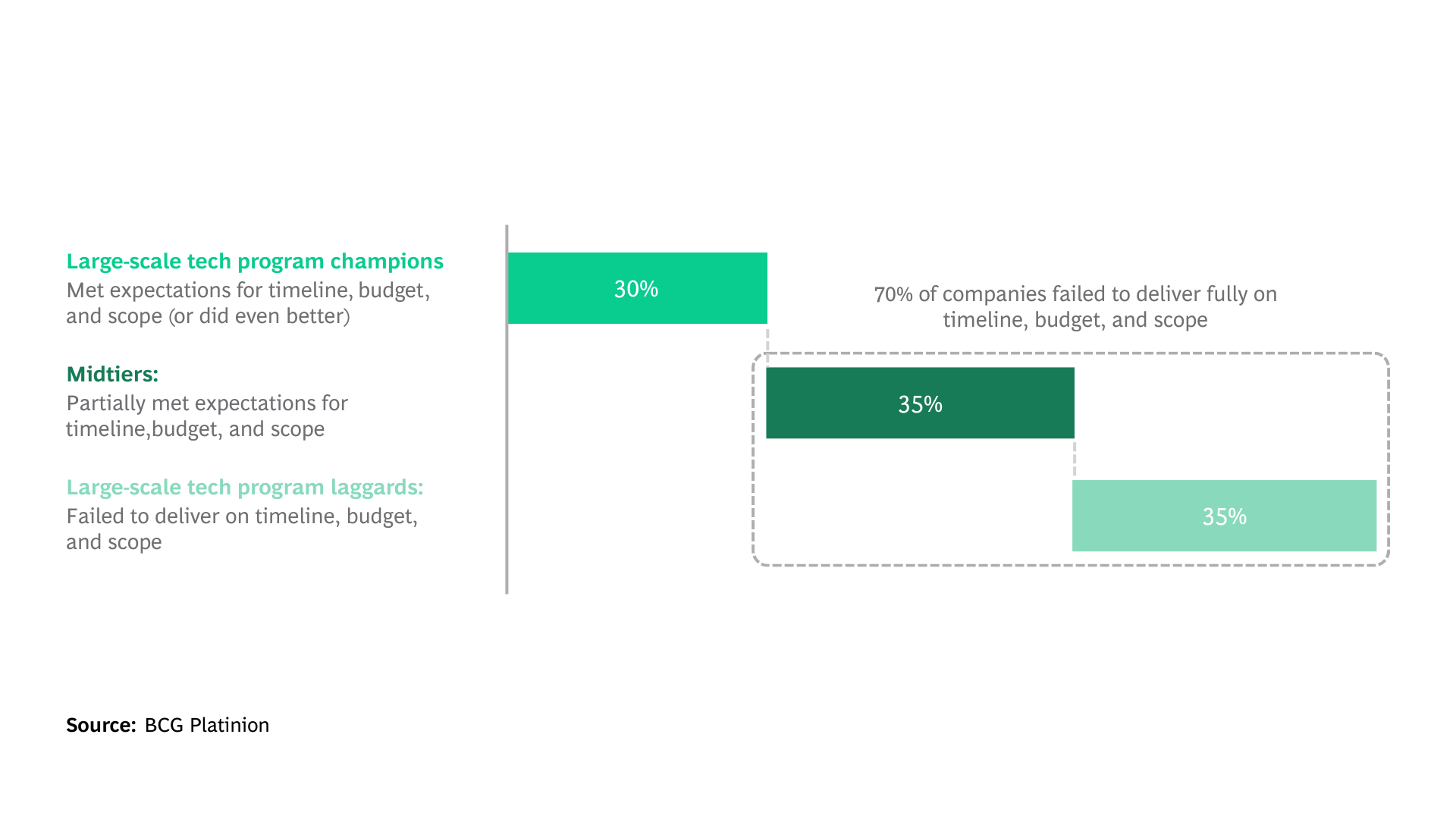
Exhibit 1: Only 3 in 10 transformations deliver on time, on budget, and on scope
A deeper look at program performance reveals where these failures originate. More than half of organizations miss one or more delivery targets, exposing persistent execution gaps that undermine strategic intent (Exhibit 2). Although 42% of programs meet planned timelines, over half experience delays — and a similar proportion exceed budgets. Even more concerning, nearly one in five fail to deliver the full scope originally envisioned.
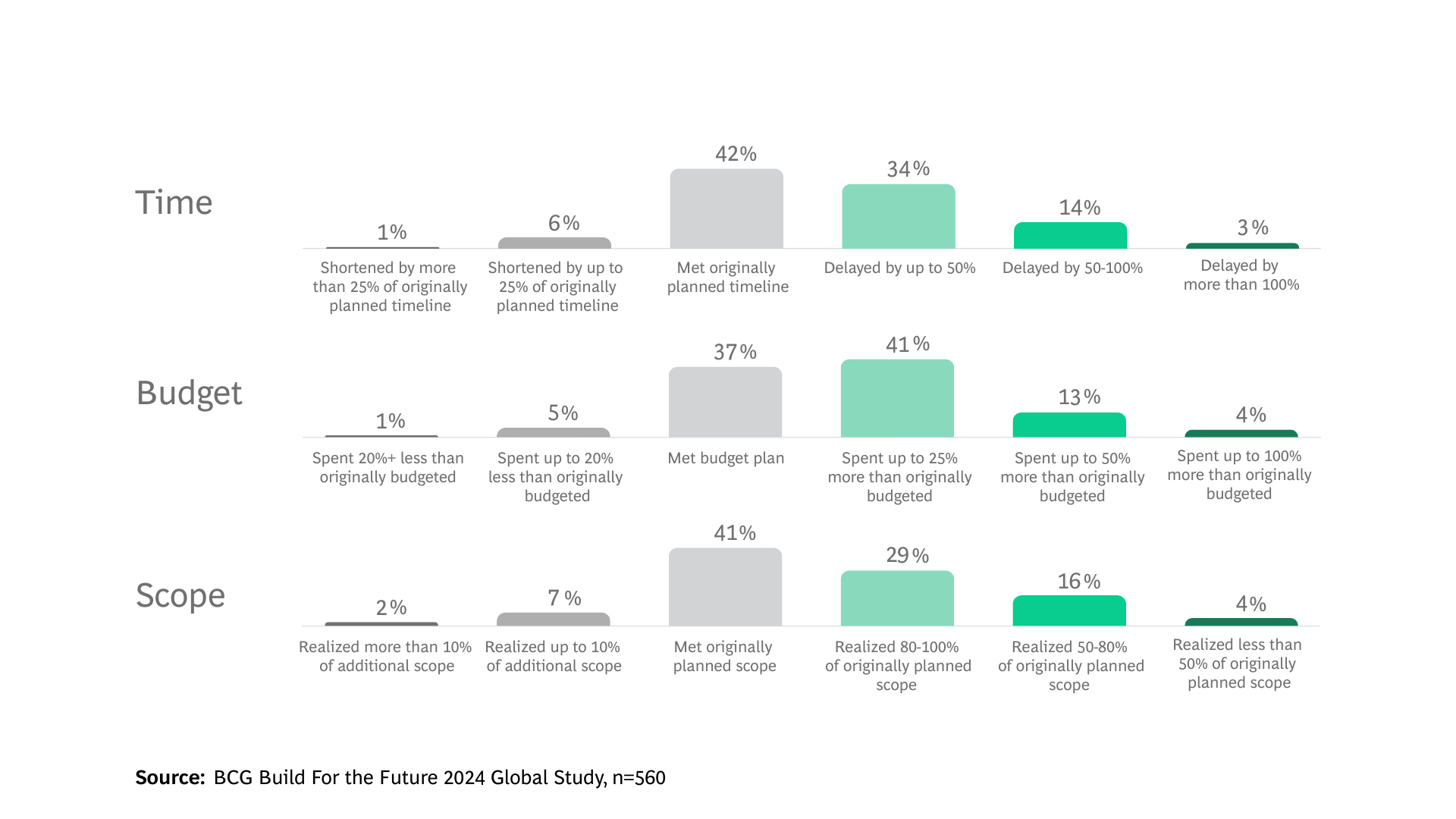
Exhibit 2: Execution gaps across time, budget, and scope highlight the need for embedded Value Assurance
These results make one thing clear: starting transformations is not the challenge — it’s sustaining orchestration across time, cost, and scope to realize intended value.
Overall transformation success rates have stagnated at around 30 to 35%, an unacceptable outcome for initiatives that often define an enterprise’s future (1). In response, leading organizations are recognizing the need to embed Value Assurance structures that keep business outcomes at the center of transformation execution, balancing ambition, feasibility, and delivery momentum.
The failure of large programs is not primarily due to technical complexity or lack of ambition. It is overwhelmingly driven by poorly structured, inappropriate governance models - the kind that fail to bridge strategic ambition with architectural feasibility and delivery execution (2).
Whether you are just beginning your transformation, already deep in delivery, or trying to get a struggling program back on course, the central challenge remains the same: how to steer complexity toward measurable value.
Three Key Disciplines of Transformation
At the heart of any successful transformation execution are three essential disciplines that must operate in concert. These are not governance layers or administrative checkpoints, they are operating principles that must be applied to unlock value:
- Business case: Defining a compelling, measurable transformation business case based on clear requirements – this forms the ‘why’ that anchors every decision.
- Delivery momentum: Achieving delivery momentum through realizable objectives and milestones, ensuring that all moving parts are aligned to a clear deadline.
- Architectural feasibility: Being precise about what will be delivered and ensuring that it can be.
If these disciplines are pursued in isolation, or without clearly defined interactions, programs risk veering into bias. They are typically embodied by structures including the Design Authority (DA), the Transformation Office (TO), and the Value Assurance Office (VAO) with each playing a distinct role. But without orchestration, they can easily pull in competing directions.
A Design Authority (DA) left unchecked may result in over-engineering, pursuing the “perfect solution” without regard for time or cost. A Transformation Office (TO) overly focused on the schedule may deliver hollow outputs that lack strategic value, and a Value Assurance Office (VAO) isolated from delivery and design may remain stuck in business case theory.
The real art lies in creating healthy tension between delivery speed and architectural integrity, using Value Assurance to mediate decisions against the business case and provide strategic steering. The VAO becomes the torsion lever: when delivery pulls for speed and design pulls for rigor, Value Assurance keeps the entire system aligned and outcome focused. For transformation success, we don’t need less tension, we need smarter steering of that tension toward value.
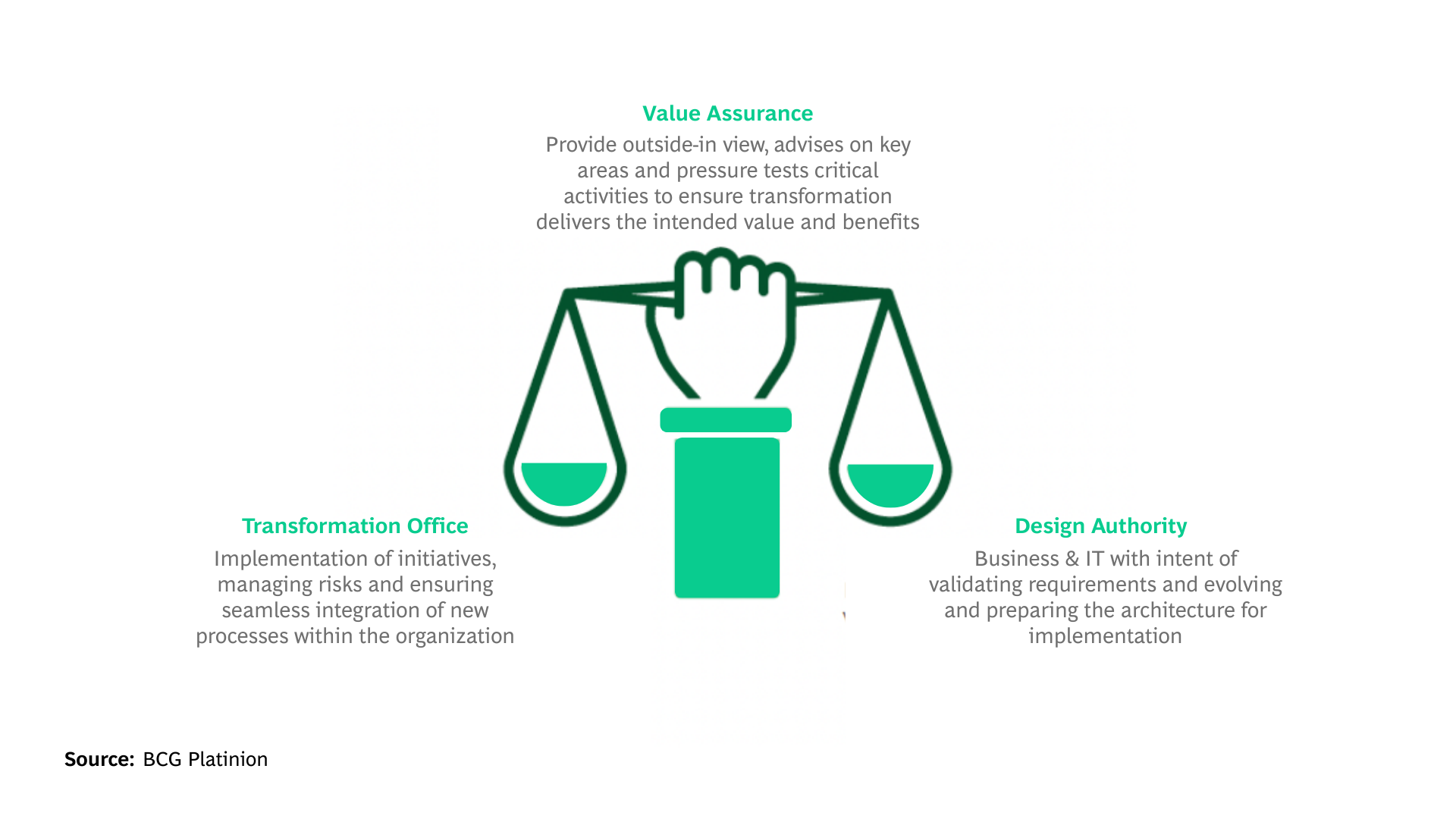
Exhibit 3: Orchestrating Transformation through TO, DA, and VAO
The interplay between the Transformation Office, Design Authority, and Value Assurance Office is what ultimately turns complex transformations into measurable success.
The Role of the Transformation Office
The Transformation Office (TO) is the operational engine of the program. It tracks milestones, manages sprint cadence, escalates delivery risks, and maintains delivery momentum. From a steering perspective, the TO is owned by the head of the Program Management Office (PMO), or the appointed Chief Operating Officer (COO) for the transformation. This role is focused on the question of ‘when can I deliver this?’, optimizing for velocity - completed sprints, on-time releases, and visible momentum.
While velocity matters, this speed-focused lens runs the risk of compromising technical delivery or strategic alignment if left unchecked. Without balancing structures, the TO can deliver ‘on-time’ while still underdelivering on intended business outcomes (2).
What if your transformation is just taking off or in the early stages? In cases like these, the Transformation Office becomes your first stabilizing force by helping to maintain cadence, rhythm, and visibility. But remember, speed without orchestration is momentum without direction.
The Role of the Design Authority
The Design Authority (DA) in transformation programs is fundamentally different from a traditional Architecture Review Board or Council (ARB / ARC). It is not a standards enforcement body or a technical gatekeeper reviewing system designs in isolation.
In large-scale transformations, the DA is a decision-making body focused on architectural coherence, functional alignment, and traceability between business requirements and technology components (3). It is chaired by the Chief Architect, who holds direct accountability for architectural decisions.
Ultimately, the DA ensures that both functional and non-functional requirements are mapped to solution components and linked through the conceptual, logical, and physical architecture layers. Other roles within the DA include the transformation lead, product owners (where required), solution architects, and selected optional members (Exhibit 4).
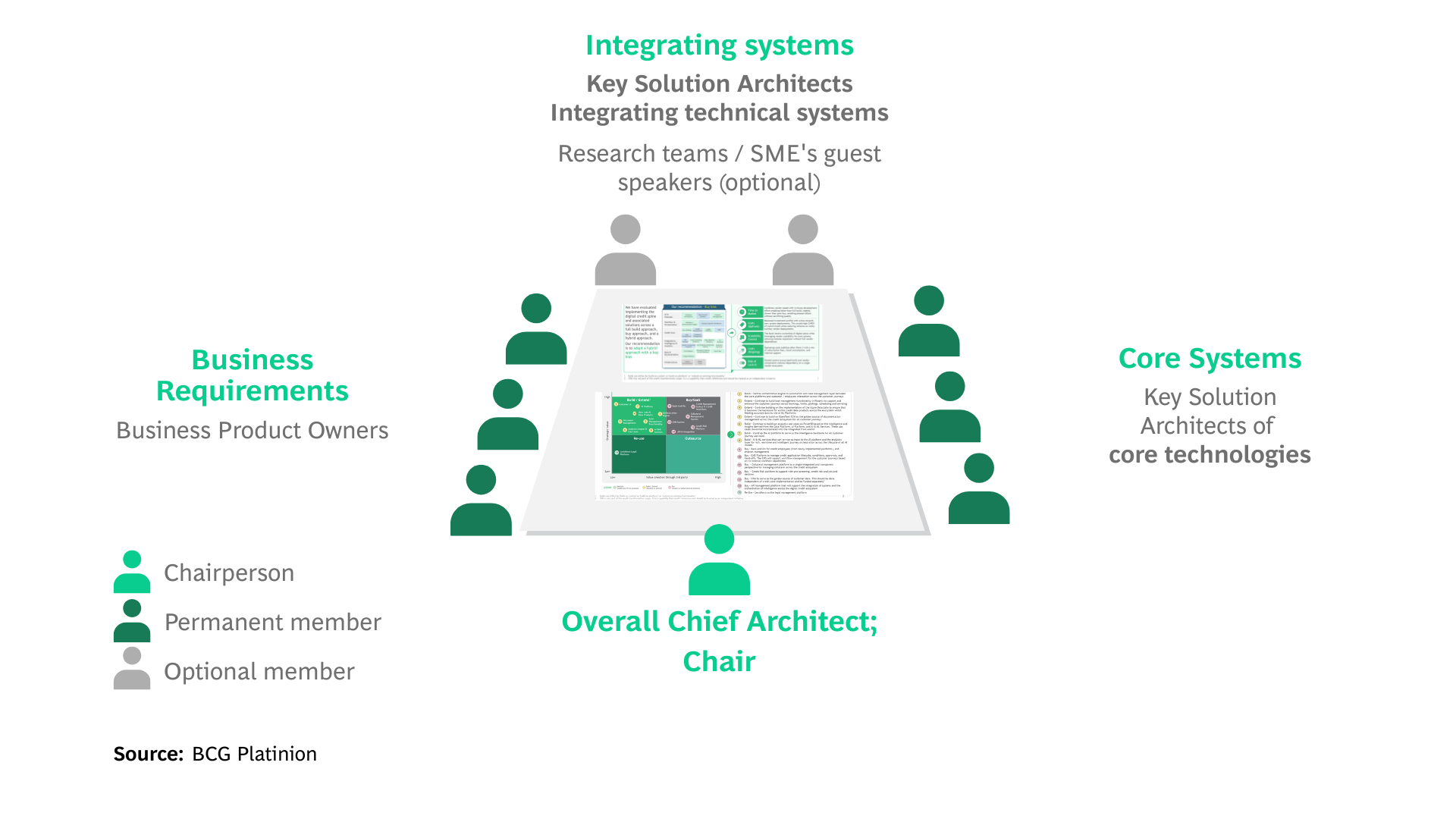
Exhibit 4: Design Authority in Action: Key Roles and Decision Makers
Operationally, the DA drives fast, structured decisions through daily operational meetings, deep-dive sessions, weekly councils, and monthly plenary updates. Architectural questions are formally logged, investigated through commissions when necessary, and resolved within defined timeframes (3).
The value of the Design Authority lies in:
- Sustaining architectural integrity aligned to business outcomes.
- Quickly resolving cross-platform technical challenges.
- Reducing rework and integration failures.
- Influencing realistic sequencing of the master roadmap.
Without a transformation-specific DA, organizations risk incoherent solutions, fragmented architectures, and ultimately, delivery that is misaligned with strategic objectives.
What if your transformation is already in-flight or entering an intensive build phase? In an instance like this, the DA is your safeguard against fragmentation. It keeps pace with delivery but ensures every sprint builds toward a coherent, deliverable future state — not just a collection of well-intentioned parts.
The Role of the Value Assurance Office
The Value Assurance Office (VAO) is the critical mediator between the TO’s delivery focus and the DA’s architectural rigor, anchoring both perspectives to the business case.
Appointing a lead value assurance officer is essential in establishing the VAO. Like a product owner, this individual typically defines and drives the strategy for the overall transformation, with a focus on making sure the strategy and business intent is always steering program execution.
Once the business case is established, the VAO mediates between what needs to be delivered (DA) and when it can be delivered (TO). Its job is centered around optimizing delivery against value realization, adjusting scope, sequencing, and carrying out architectural work as needed. All of this must be done without undermining feasibility or velocity (4)(5).
The VAO’s mediation is active and structured, it pressure-tests designs, scrutinizes delivery plans, challenges benefits assumptions, and ensures that each decision, trade-off, and course correction remains anchored to business value (12).
Key questions asked by the VAO:
- Does the proposed solution deliver the intended business outcomes?
- Is the delivery timing realistic given technical constraints?
- Can scope or sequencing adjustments unlock earlier or greater value?
In technology platform modernization, the VAO ensures architectural investments align with tangible business justification (4). For value chain expansions, it validates that integration pathways are scalable and secure (5). When it comes to product innovation, it makes sure feature developments align with strategic ROI goals.
Without a VAO, transformations risk becoming internally focused, optimizing only for architecture or only for speed and losing sight of the original business case along the way.
What if your transformation is struggling to to stay on the execution path? At this point, the VAO becomes your steering lever. It refocuses teams on why the transformation exists in the first place — ensuring delivery serves strategy, not the other way around.
Understanding the Value at Stake
Programs that lack structured mediation between design and delivery tend to fail at alarming rates. Without a Value Assurance Office (VAO) or equivalent structure, transformations are twice as likely to suffer major cost overruns, and three times more likely to underdeliver on strategic objectives (10).
The financial implications are equally stark. Project delays alone can inflate costs by 100% to 170% of the original investment, while investing just 3 to 5% of the program budget in de-risking mechanisms like Value Assurance can yield a 30 to 60x return (10).
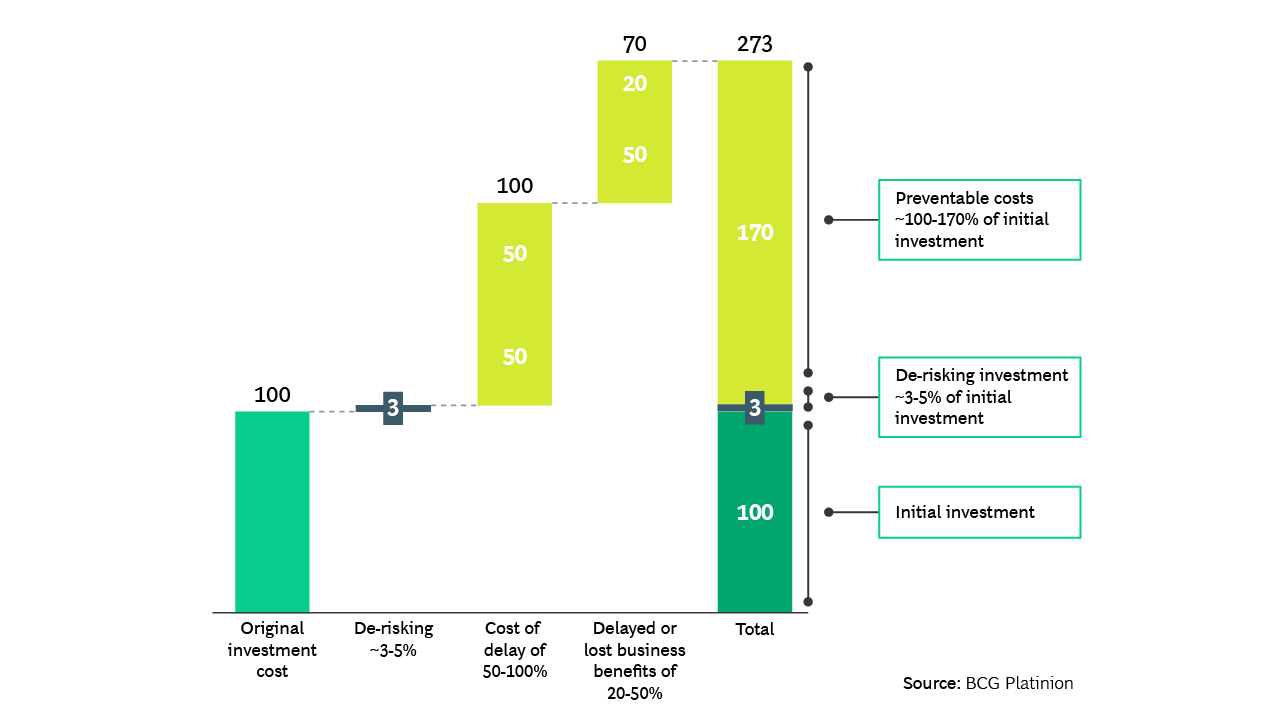
Exhibit 5: DE-Risking Pays: 3-% Investment = Up to 60x Value
What if you could design success before execution starts? The greatest value is often won or lost long before delivery. Embedding Value Assurance early fosters clarity, control, and confidence from day one.
Getting Started – Operationalising Value Assurance for Transformation Impact
Building a Value Assurance capability requires deliberate executive design. Here is an overview of the key steps:
- Organizations must clearly define distinct mandates for the TO, DA, and VAO, empowering them but keeping them in productive tension (and always anchored to business outcomes).
- The VAO must be embedded from inception, with involvement in solution framing, benefit tracking, and sprint orchestration before major designs or delivery schedules are locked in.
- It must report to an executive sponsor - ideally the chief transformation officer, chief operating officer, or chief financial officer - to maintain strategic independence and influence. In technology-led transformations, this role may also be held by the chief information officer, chief technology officer, or chief digital officer, provided the focus remains anchored in business outcomes.
- The VAO must be staffed by seasoned leaders who can operate across architecture, delivery, and commercial dimensions.

Exhibit 6: Most Value is Won (or Lost) Before Execution Begins
While this may sound obvious, in practice it rarely is. Many organizations underestimate the depth of design and leadership discipline required to make these structures truly work in concert. The result is often a governance façade: processes that appear robust on paper but fail to mediate real trade-offs or steer outcomes.
True Value Assurance isn’t about adding control; it is about creating orchestration — an active tension between delivery, design, and business value that must be steered deliberately at the executive level. And that is where the leadership challenge begins — the executive play for transformation success.
The Executive Play for Transformation Success – Embedding Value at Every Stage of the Journey
Transformation success isn’t determined by ambition alone, it is defined by how leaders steer that ambition toward measurable outcomes. Wherever your organization stands, the play remains the same. Embed Value Assurance to anchor every decision in business value:
- If you are at the start of your transformation, now is the time to establish the right governance structure embedded with a Value Assurance Office to steer execution from the outset. This will anchor every decision to business value.
- If you’re mid-flight, course correction is still possible. A focused assessment can identify where speed is outpacing quality, where design is disconnected from value, and where realignment is needed to protect outcomes.
- If your program has already gone off path and needs to get back to green, quickly assess the causes of imbalance, re-anchor to the business case, and reset coordination between delivery, design, and assurance functions.
- If you’ve recently completed a major program, take the opportunity to reflect. Were your governance structures fit for purpose? Did you realize the full business case? And are you now better positioned for what’s next?
As a guiding principle, orchestration — not governance — is the key to transformation success. A winning program depends not just on delivery or design, but on how these forces are balanced and steered in real-time execution.
No matter where your transformation stands, at inception, mid-flight, or reflection; orchestrated assurance is the mechanism that converts ambition into realized value. Because in the end, transformation success isn’t managed — it’s orchestrated.